S.A.R

,

  • Contact
  • The worlds most popular sword-swallowing grandad/statistics professor brings reality to the news about the current headlines.

    Don’t miss his amazing TED talks going back to 2006 to now.

    Hans Rosling says what’s what, again

    –––––––

    Sep 5
  • “One morning, while working on a project, I Googled “python lambda function list comprehension.” The familiar blue links appeared, and I started to look for the most relevant one.
    But then something unusual happened.

    The search results split and folded back to reveal a box that said “You’re speaking our language. Up for a challenge?”

    Source: Google Has a Secret Interview Process… And It Landed Me a Job

    This is straight out of the Matrix.

    –––––––

    Aug 26
  • The sometimes absurd problems with modern architecture and interior design haven’t changed since 1997, when this book and TV series highlighted them.

    1. How Buildings Learn 

    –––––––

    Jul 23
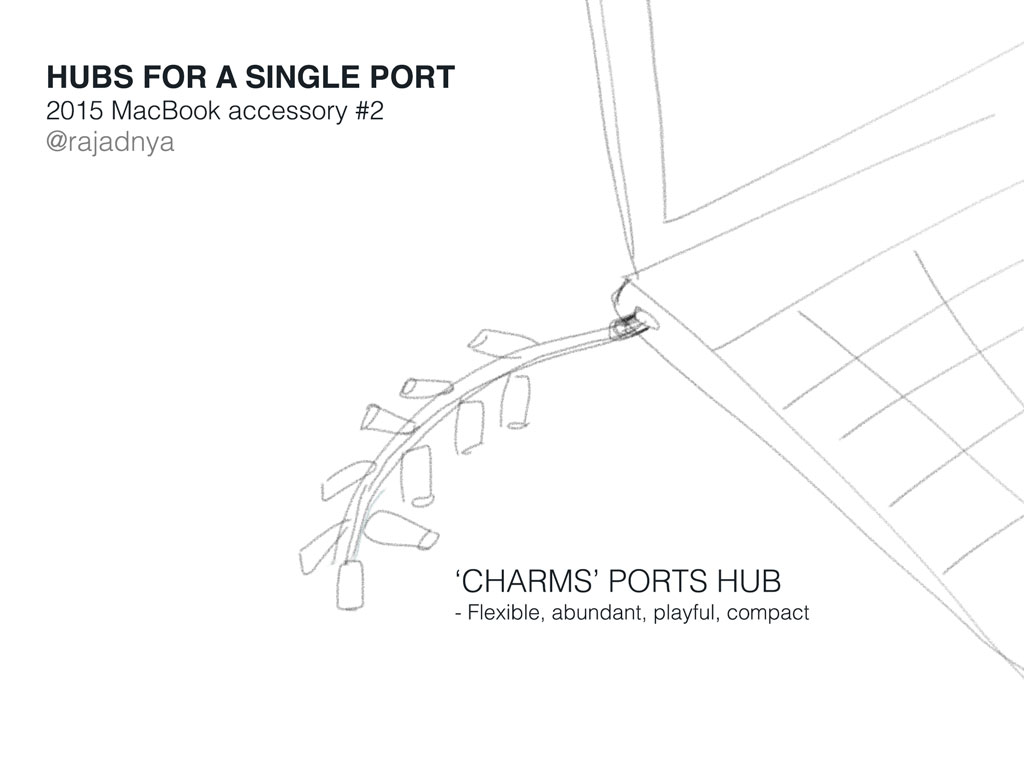
  • They say its silly to have just one port on a computer – but i think it doesn’t really matter now. I stopped using CDs years before they shipped a Mac without one, and this will be just fine – even if its not for everyone. Has anyone noticed that almost every commonly used camera is now on permanently connected to the Internet?

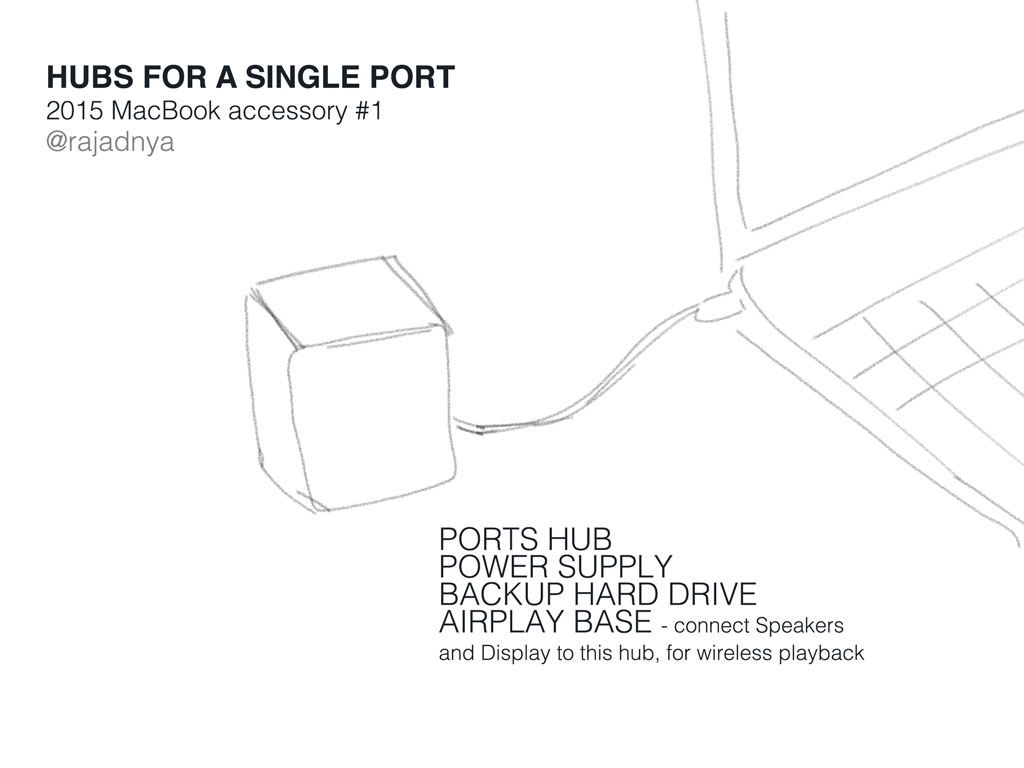
    Here are two quick sketches of Port-Hubs that I think would be cool to have, one for when you’re at a desk and one when you’re away from it.
    Apple-Hubs-1 Apple-Hubs-2

    Port-Hub Designs for the new 2015 MacBook

    –––––––

    Mar 14
  • Currently engineers & scientists building automated self-driving cars, are attempting two methods:

    • Easier (actually very difficult):
      Cars that sense the road, and assist human drivers for specific tasks like self-parking, or avoiding accidents, or highway driving. And Elon Musk says Tesla’s high-tech cars will run on ‘auto-pilot’ 90% of the time by 2015.
      These are useful features for a human driver to have, but they don’t create any of the incredible systemic changes & benefits of true self-driving ‘robot’ cars.
    • Harder (even more difficult):
      Its the last 10% of true self-driving, that Google is attempting — truly autonomous cars, that drive themselves anywhere by sensing everything. They dont even need to provide steering wheels…

    In both techniques, the car has sensors like GPS mapping, and laser LIDAR ‘eyes’ that detect everything from pedestrians to obstacles and other cars.

    Autonomous driving ability is hugely difficult to get right, for engineering, real-world, and even insurance & legal liability reasons, by current laws.

    This video shows just what Google is trying to build and overcome. You can see here how they’re attempting to make a car ‘drive like a human’ so it signals to human drivers in familiar ways. The human ‘safety driver’ testing the vehicle also talks about the automated cars ‘assertiveness’ as a driver.

    Even if perfected, Googles system might work in western countries with mature traffic rules, systems and human behaviours…but it would likely be challenged in the less organised roads of the  world, from Africa to India, as seen here.

    The dream of total automation could prove surprisingly elusive.

    MIT Technology Review:‘Driverless Cars are further away than you think’

    The key factor is human behaviour — unpredictable actions for a computer system that counts on knowing what comes next to a high degree. Not to mention the risk and dilemma of Insurance claims for damage, based on decisions made by a computer – who is liable? the owner of the automated car? the company that made it? The company that wrote the software? The company that made the cars sensors?

    Take the trouble with diagnosing why your laptop may be malfunctioning – is it something you did, an app, the operating system, the hardware, some hidden setting maybe? – and multiply that by a factor of life and death.

    Beyond engineering, for truly automated cars, at the minimum there are issues of:

    • making it affordable given the current sales model
    • putting enough on the roads for the system to not be a niche technology and really have network benefits
    • old road safety laws and regulations that are made for a human-driver context
    • Insurance assumptions that are made for a human-driver context

    See: Popular Science: Everybody needs to get out of the way of Robot Cars


    But why try and make a car drive ‘like a human’?
    Its a transportation system, not a person.
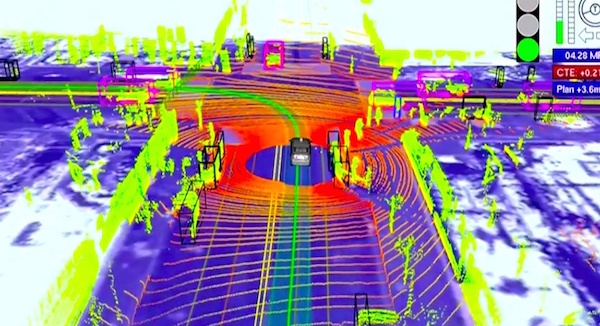
    Just some of the data currently needed to be tracked by a self Driving car — from IEEE Spectrum Magazine


    So, do Automated cars have to be Independent?

    That is not a trick question. Automated transportation, and cars that drive themselves (though very cool) – are two very different things.

    Could there be a middle ground to current methods? Something that attempts to simplify the engineering and cost issues, while addressing the legal ones?
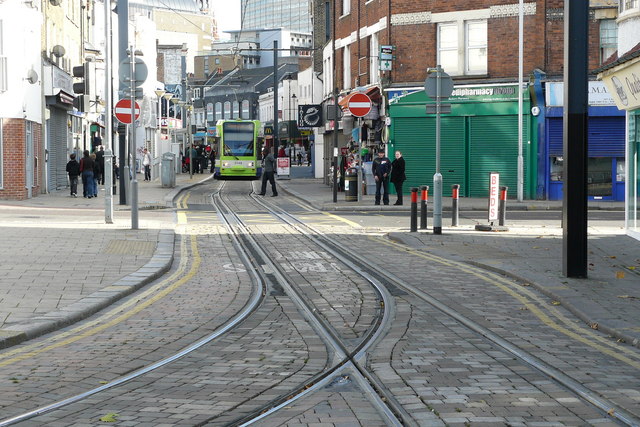
    The Idea: Automated Cars, but following painted ‘rail-tracks’ on the road

    Trams are guided by tracks. Automated Cars could just follow painted stripes instead. Pedestrians know to keep away from the stripes, and the cars can easily manage avoiding each other, and still beep or stop if a pedestrian gets too close.

    These ‘Smart’ stripes, painted onto roads, would be:

    080501003
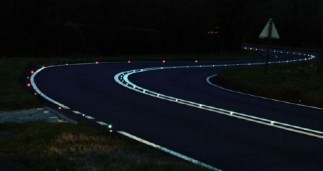
    Solar-powered road studs are already used globally on roads, to improve night time vision. Stripes with RFID are just a small additional step.
    • Easy to paint onto existing roads with current equipment and manageable budgets.
    • Stripes would have something like RFID chips embedded every short distance. These passive digital markers can be useful for storing basic data about the road/terrain/last 5 cars ahead and their speed. This could be useful to supplement any cars data/information passively for added safety, if wireless network signals fail or get blocked.
    • Can be maintained as a part of regular public city infrastructure, and provides an interface between public city systems, and private vehicles, thus reducing the burden on a cars system to understand and keep up with any change in road conditions/situations. Even at an immediate local level in case of accidents, police calls in a neighbourhood, Public services can ‘write’ information into the digital cloud, as well as the physical road itself, as backup.
    • Stripes are easy for pedestrians, bicyclists and non-autonomous cars to see, keep an eye on, or avoid, and include within existing signalling regulations.
    • Stripes could also mark specific road lanes, for autonomous cars alone – from highways, to suburban streets.
    • Stripes can be extended from the road right into parking spots by building owners themselves – making it fast to implement by dividing the work. Imagine knowing where the free spots are when you drive in, and being able to pick or pay for one in advance.

    Imagine city roads painted like a giant circuit board with smart strips — a passive, low-tech, backup system to gps and wireless data

    • As I understand it, if these stripes are implemented, Car sensors will need to mostly just detect obstacles well, and talk to other cars nearby about their intentions like turns, speeds, and heading. They can also leave their motion data on the RFID in the Stripes for following cars as a failsafe.
    • Since the road ‘speaks’ to cars through the stripes, its a backup system to tracking their ‘real’ location on the road via GPS.
      Its then less critical, though still handy for route/congestion planning etc.
    • Stripes with RFID are also a level of failsafe in case of failure of the wireless or GPS signal, or an onboard computer crash. ‘Dumber’ and less complex sensors can use the road-stripe data to safely come to a halt, if the main computer stops sending signals, or sends conflicting messages.

    I’m sure there are issues I haven’t thought of with this system, but it seems to hit the spots in my mind.

    • Simplicity – Reduces the complexity of Independent Automated Cars (that i can see with my limited knowledge)
    • Sharing the burden of operation from the cars’ on-board system and ‘cloud’ with public city infrastructure
    • Standardisation – Stripes can be used by any vehicle made by any company in a standard way
    • Vehicle types – Works for Trucks, cars, golf-carts and motorcycles in the same way, for local or long distance travel.
    • Encourages governments and municipalities to get involved for the benefits, spreading the cost of rolling out true automated transport to the public.

    Discuss!

    Painted Rails: An idea for getting Self-Driving Cars on the road sooner, rather than later

    –––––––

    Feb 15
  • Are we ready for companies that run themselves? – David Morris – Aeon

    First Automated factories, now Automated Corporations

    –––––––

    Jan 31
  • State Surveillance, tracking technology, capitalism, labor efficiency, and the failures created by risk aversion.
    A spectacular round-up of where we’re going…

    Ai Weiwei is Living in Our Future


    From the inside, looking in…

    –––––––

    Jan 4
  • Nicholas Carr’s ‘Glass Cage’: Automation Will Hurt Society in Long Run | Mediashift | PBS

    A nuanced take on Automation, and human fulfilment at work

    –––––––

    Dec 14
  • IMG_1024.PNG
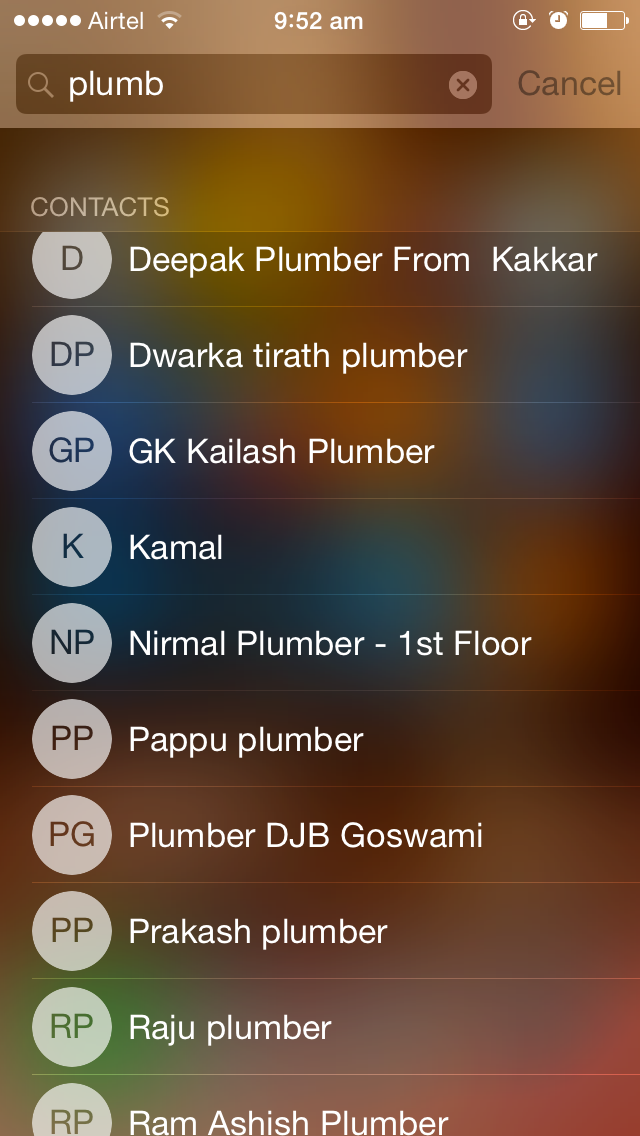
    14 years of plumbers across 5 houses – and I can’t sort my phone book entries by ‘date added’ for the one I used most recently. (I was as surprised as you are at the number of search results, believe me!)
    Or tag them by ‘area’ like phone camera photos are auto-tagged by gps.

    It’s almost 2015, software people…get to it!
    #betterdesignplease

    Phone book #UIFail

    –––––––

    Dec 6
  • bookmyshow

    I can book tickets ‘instantly’ but I cant book in ways more typical to everyday situations : like whats playing at 9pm today. Or at my regular go-to Cinema.

    These database-query sites make it easier to book a ticket in Bathinda than in PVR Saket

    #uifail #betterdesignplease

    Buying Movie Tickets #UIFail

    –––––––

    Dec 6
Previous Page Next Page

Blog at WordPress.com.


Loading Comments...
 

    • Subscribe Subscribed
      • S.A.R
      • Already have a WordPress.com account? Log in now.
      • S.A.R
      • Subscribe Subscribed
      • Sign up
      • Log in
      • Report this content
      • View site in Reader
      • Manage subscriptions
      • Collapse this bar